






We do not support your accounting books? No problems. You are welcome to prepare your income tax and benefit return with us.
We provide CRA’s represent–a-client services to help individuals and small businesses prepare and file income tax and benefit return. We prepare and file personal and corporate taxes electronically using the CRA approved EFILE web services. Please, identify your tax scenario and follow our tax prep checklists to gather all relevant documents for your tax situation.
Do you rent your principal residence? If yes, then please supply us with the rental charge per the tax year. Do you own your principal residence? We would need to know your property tax amount paid in the tax year. Did you pay for your personal health to registered medical practitioners (dentist, chiropractor, or other health clinic)? Please, prepare a list with your medical expenses.
Employment income
Employment income tax return T4 , T5 slips tax preparation services near Burlington, Oakville, Hamilton
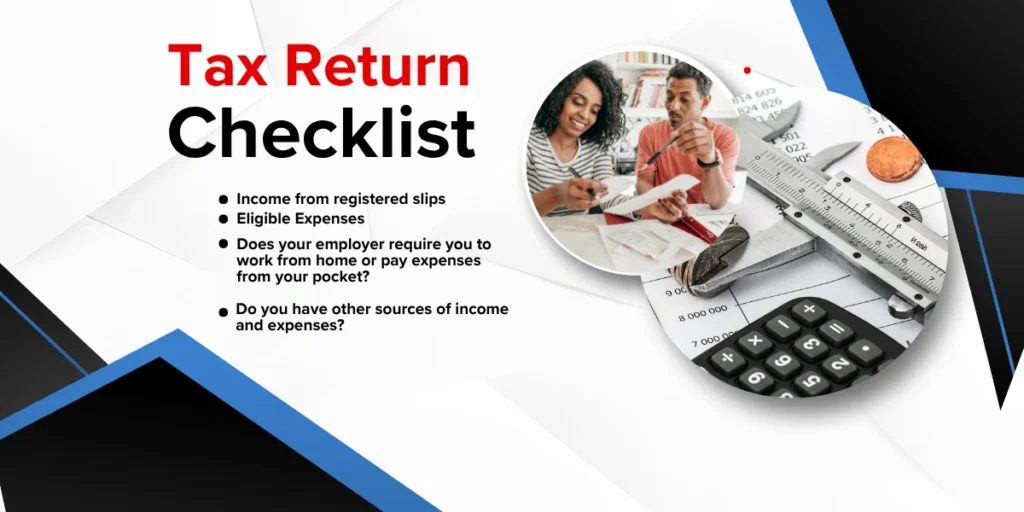
Employment Income and Expenses. Tax filing for employed individuals in some situations allows deduction of expenses to lower the tax amount owing. Does your employer ask you to spend money from your pocket to earn your employment income? Whether on salary or commission you can deduct certain expenses (including HST). Also, when your employer asks you to work from home, you are allowed to deduct eligible home office expenses as well. If this is your tax situation, we will help you to prepare and file your personal income tax return, making sure we include all eligible expenses you may qualify for. To claim your eligible expenses, they need to be recorded and attached to your personal T1 tax return.
Self-employed income
Small Business Tax Filing
Small business owner or self-employed or solopreneur? We prepare and file tax returns for small businesses and sole proprietors. Your tax situation: You are an employer or self-employed, you are not incorporated, and you are involved in:
- Business (from selling products)
- Professional Service
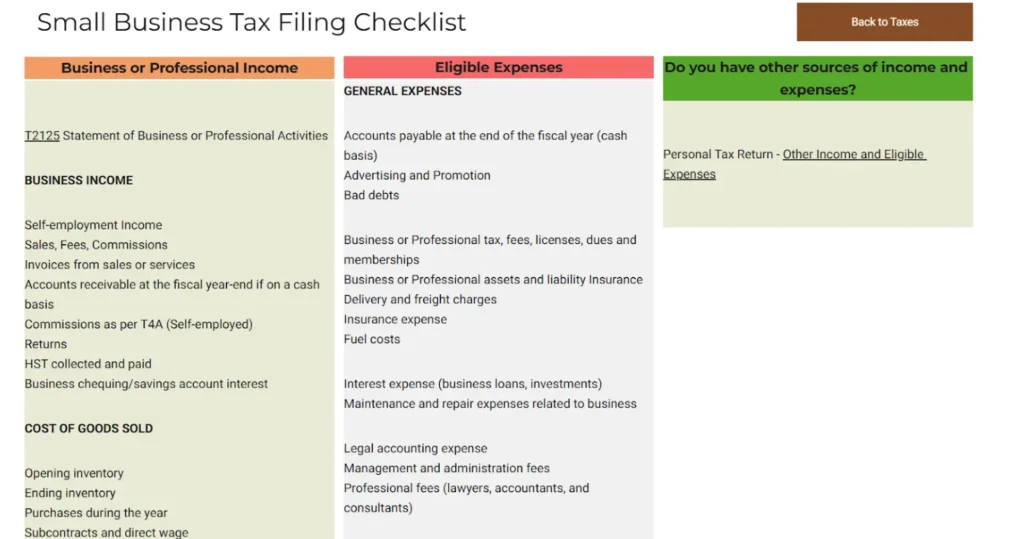
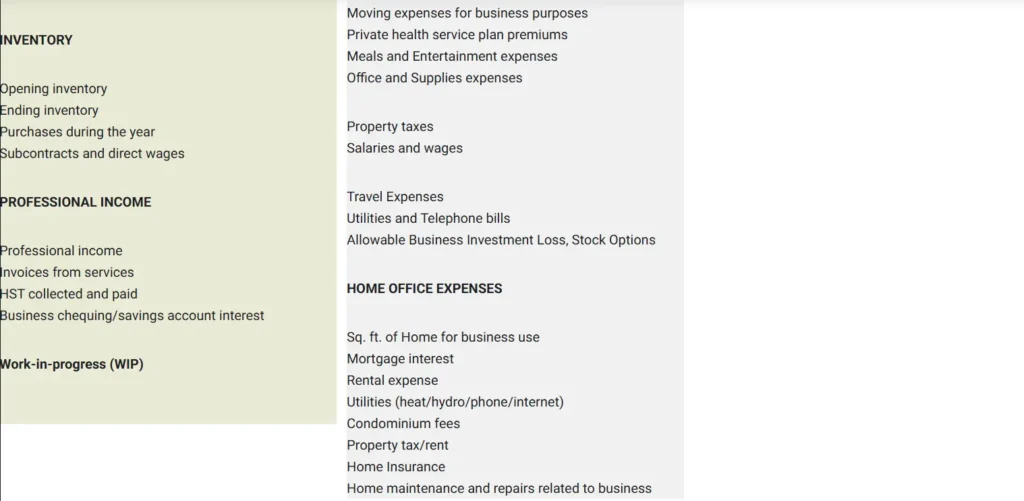
Please, check all the relevant documents to attach to your personal T1 tax return package. Self-employed tax preparation fees start from $120 for sole proprietor business or professional service. Small business or professional service fees start from $300 and increase depending on the complexity (ex: filing for a partnership).
Rental Income Tax Filing

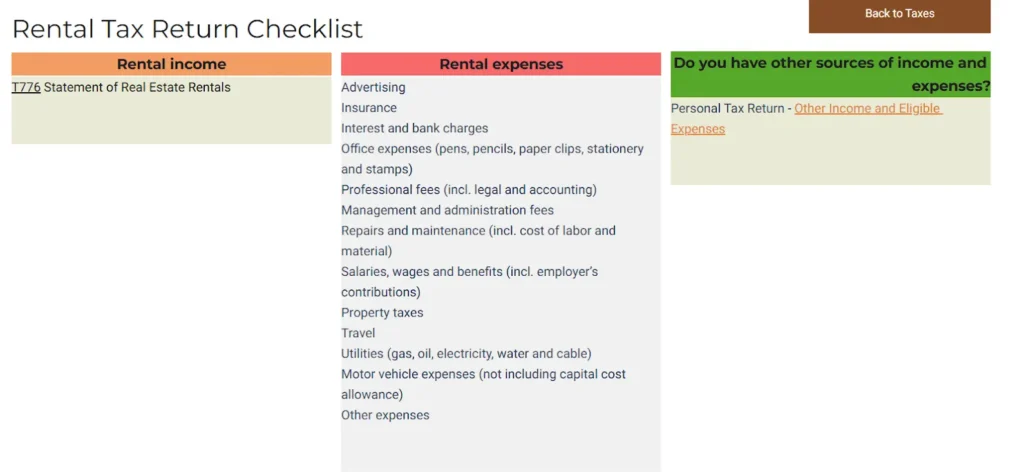
We prepare and file tax returns for rental businesses. Your tax situation: You are an employer or sole proprietor, and you receive your income from rentals. Please, gather all relevant documents using Rental Income Checklist to attach to your personal T1 tax return package. Rental tax preparation fees start from $120 and increase depending on the complexity (ex: partnership).
Investment Income
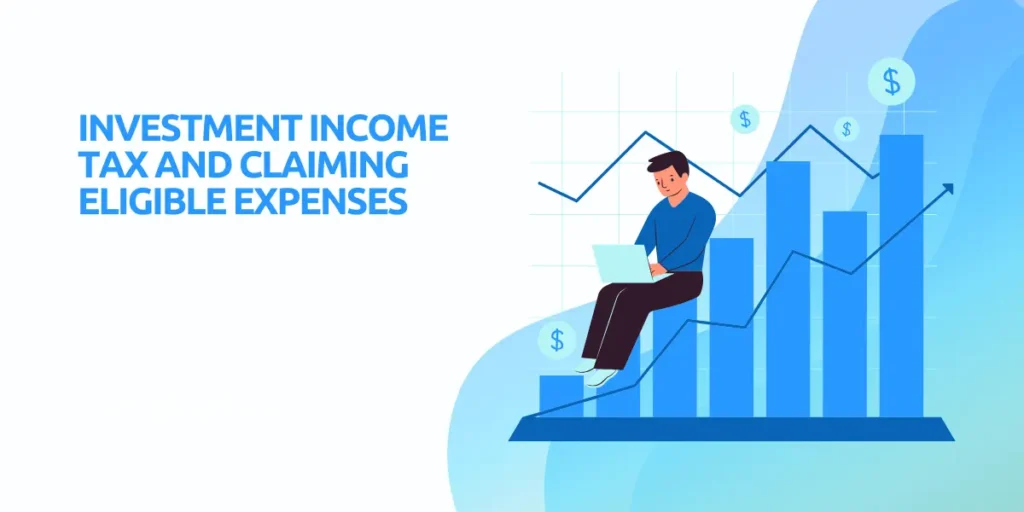
Reporting investment income and claiming eligible expenses related to investment income.
When claiming investment expenses these expenses must be related to only income from a business or property. Your business must produce either goods or services. There are three main categories of investment income: interest, dividends, and capital gains:
- Eligible and other than eligible dividends
- Interest on your bank account
- Interest on GIC
- Interest on CSBs
- Interest on disposition of a treasury bill
- Earnings on life insurance policies
- Foreign interest
- Capital gain (loss) when selling or transferring capital property (land, buildings, bonds, shares, funds, and trust units)
What is important to know
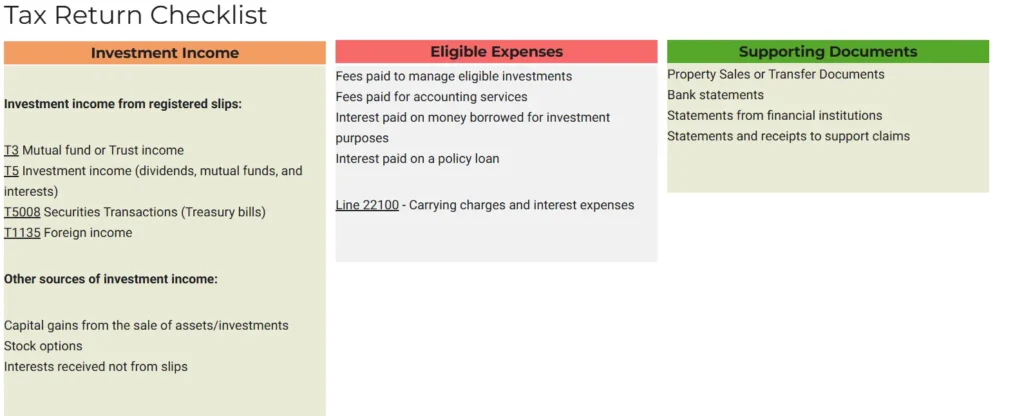
You are eligible to claim the following carrying charges and interest that you paid to earn income from investments:
- Fees paid to manage investments 1
- Fees paid for accounting services (filing an income tax return for your business)
- Interest paid on money you borrowed for investment purposes 2
- Interest paid during the year on a policy loan (T2210 form)
1. Cannot claim the interest you paid for PRPP, RRIF, RRSP, SPP, and TFSA tax-free type of investments
2. If your investment can only produce capital gains you cannot claim the interest paid. If your investment in common shares and a corporation is not paying dividends, then interest on money borrowed to purchase these shares is not tax deductible.
Canadian Student
Student Tax Return
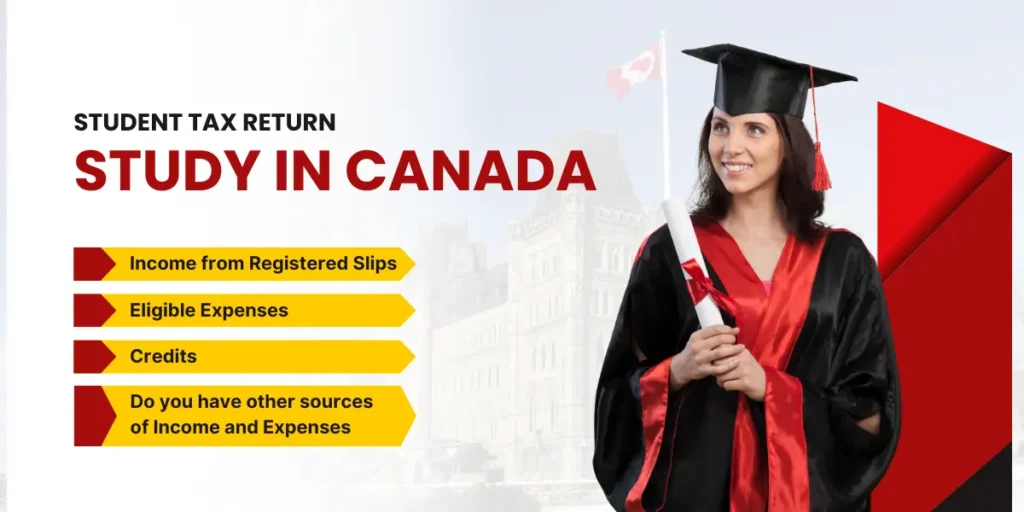
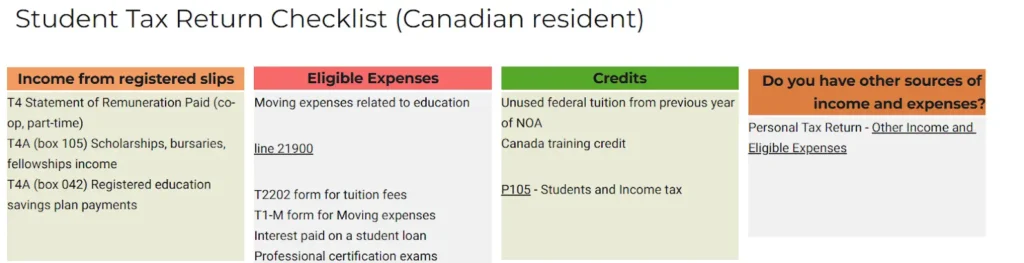
Canadian student income tax return filing covers a situation when a student is a resident of Canada. We prepare and file tax return for Canadian students who are full-time students, residents of Canada or received a scholarship grant from the Canadian government at a post-secondary school level. This specific tax return can be filed independently of the student’s families. Students eligible to claim moving expenses are full-time students who are enrolled in co-op program. The new location must be at least 40 km closer to the school. Full-time students are those who regularly attend an educational institution and take at least 60% of the educational program.
Not qualifying students who received education assistance can reduce the amount received by the $500 basic scholarship exemption. Please, check all the relevant documents to attach to your personal T1 tax return.
Disability Tax Credits
Disability Tax Credits and Deductions
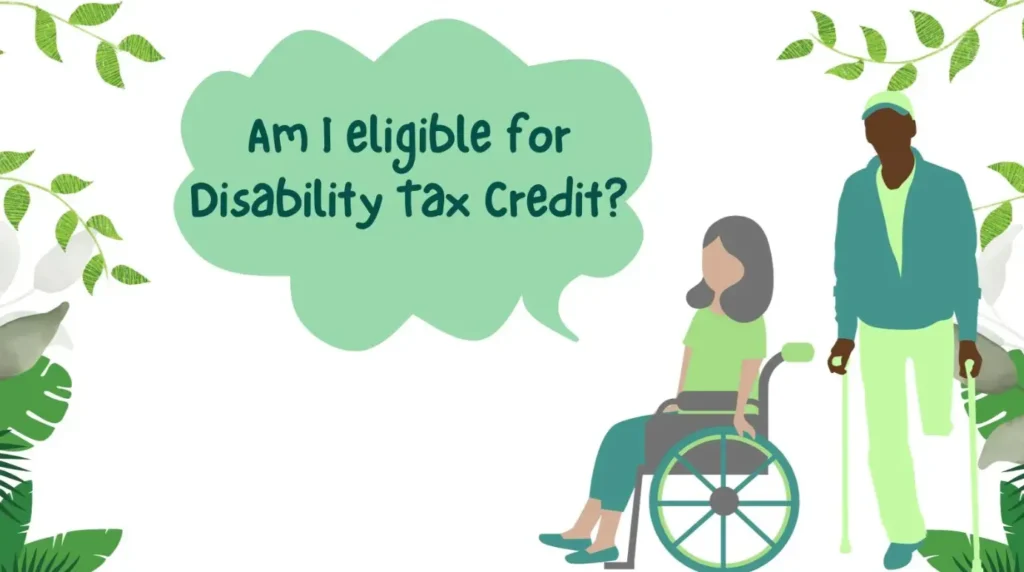
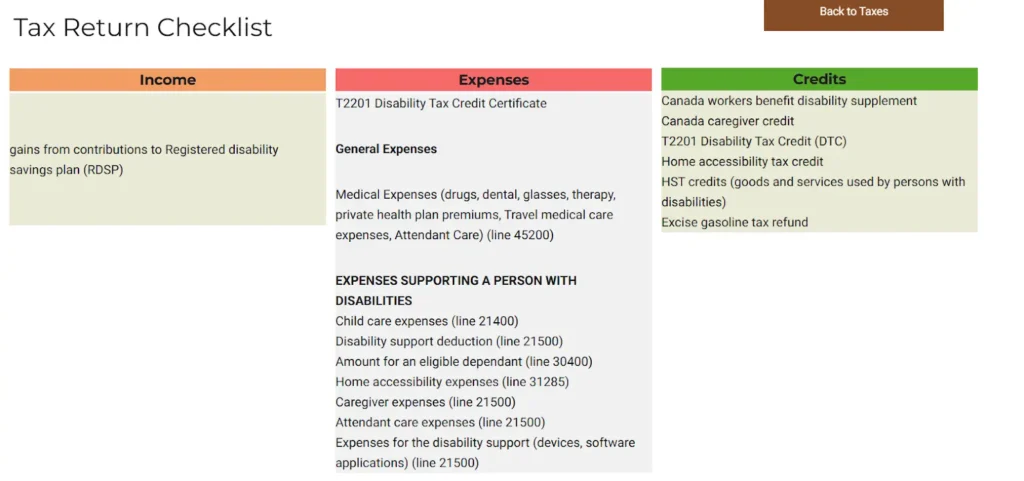
What tax credits and deductions for persons with disabilities can be claimed? Canadian government helps individuals and their care providers to reduce costs related to having prolonged disability. Two major credits are disability tax credit and Canada caregiver credit. The other main source to reduce the amount own would be deducting expenses related to childcare and disability support. We certainly seek to include all eligible deductions and credits the persons with disabilities may qualify for. Please, check all the relevant documents to attach to your personal T1 tax return.
Retired and seniors
Pension Income Splitting
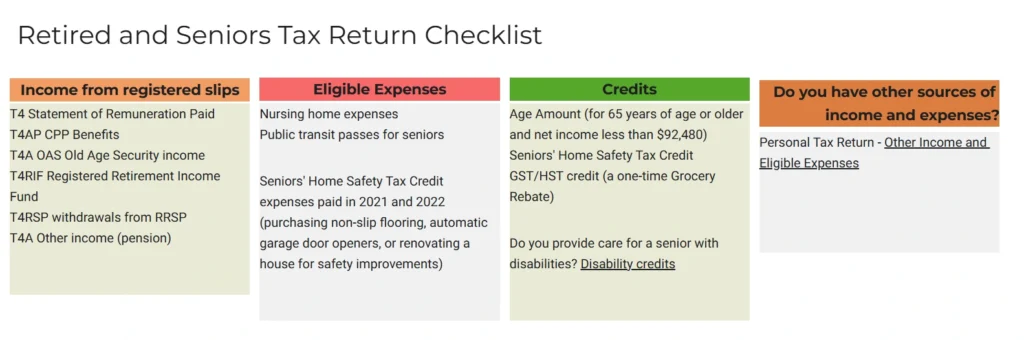
The Government of Canada developed several tax programs to help retired Canadians to receive the benefits and credits when filing taxes.
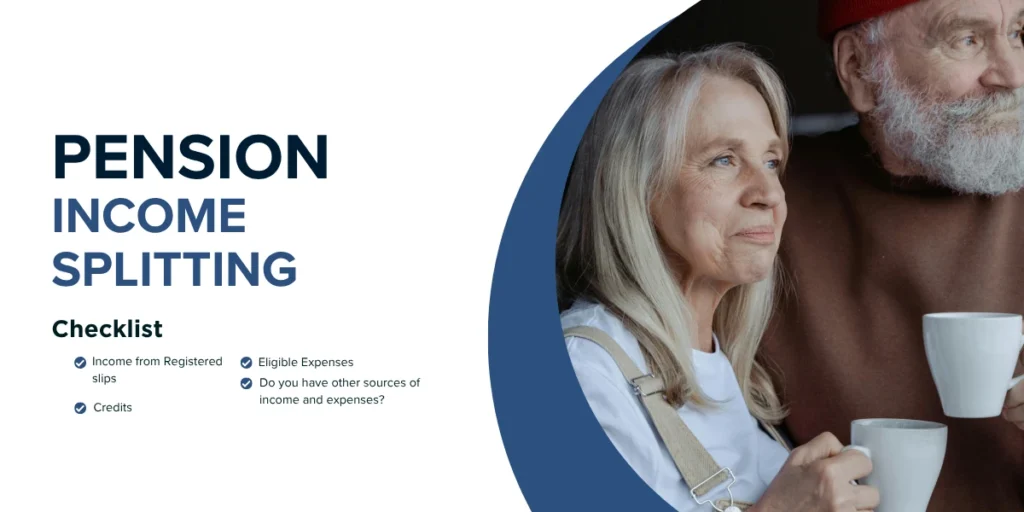
One of the common strategies to consider saving tax for a retired couple is the pension income splitting. Another strategy is to contribute to the RRSP plan (until 71 years of age). When turning 71 years of age, RRSP must be transferred to RRIF using bank services. Claiming eligible medical expenses also helps to reduce the tax owed. We review your tax situation and include all the possible items on your tax return to save most of your money. Please, check all the relevant documents to attach to your personal T1 tax return.
Who is considered a retired person?
If you are 55 years of age or older, you are not employed and 50% of your income is coming from your retirement income source, you are considered a retired person. The retirement income sources are Old Age Security pension or the Guaranteed Income Supplement (benefits from the Canada Pension Plan), investments and dividend pensions, superannuation, and annuities.
Deceased Taxpayer
When a loved one in your family dies you still go through the process of tax preparation and filing a tax return for a deceased person. This tax preparation process is similar when a person is alive and consists of preparing all income before the death and claiming all eligible credits and deductions. Sadly realize, but this is yet a necessary task to do. The Canadian government published useful information “What to do when someone has died” to help filing the appropriate tax forms during sorrow times.
What is important to know
Filing the terminal tax must ensure that any debt of a deceased person is paid off to protect you from liability. This process starts with assigning the legal representative responsible for closing all the estate accounts in the trust. The legal representative is granted access to the deceased person’s CRA account. They can review notices of assessments, taxes that are due, unused refunds, carried forward deductions, and all the relevant slips (T4s, T3, T5). Other documents that might be needed are bank accounts, RRIF, and RRSP statements to evaluate the assets and earned income of the deceased person. To file the final tax return, the regular T1 form is used following the same route as for a live person. Only after the final tax return is submitted, you begin distributing the assets of the deceased loved one to beneficiaries.
Corporate Tax Filing T2
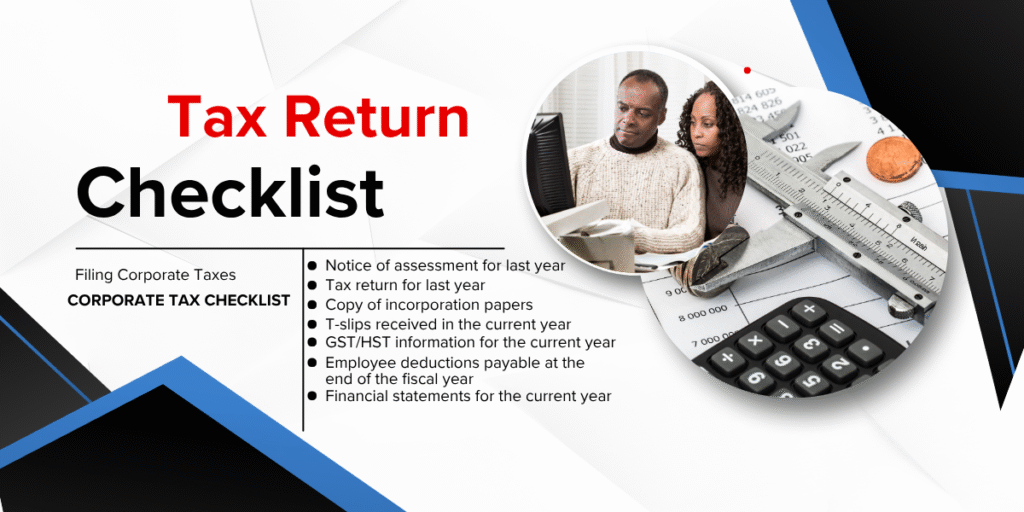
Filing Corporate Taxes
Corporate Tax Filing near Burlington, Oakville and Hamilton surrounding areas. Filing corporate taxes deadline is within six months of the tax year end. What if the corporation incurred a loss for the year? Still, corporations residing in Canada have to file a corporate income tax return even if there is no tax payable. Most non-profit, tax-exempt, and inactive corporations must file T2 returns every year.
We are approved CRA e-filers to help individuals and small businesses prepare and file income tax and benefit returns. We prepare and file personal and corporate taxes electronically using the CRA approved EFILE web services.
Corporate Tax Checklist
If filing for the first time with us, we would need you to bring the following documents:
- Notice of assessment for last year
- Tax return for last year
- Copy of incorporation papers
- T-slips received in the current year
- GST/HST information for the current year
- Employee deductions payable at the end of the fiscal year
- Financial statements for the current year
When a corporation incurred a loss for the year
Non-capital loss and farm loss (calculated on Schedule 4, Corporation Loss Continuity and Application). A current-year non-capital loss can be applied against any income for the three previous years. The current-year non-capital loss can reduce income for the 20 following years and for the 3 previous tax years.
Capital loss (calculated on Schedule 6, Summary of Dispositions of Capital Property). A net capital loss can be applied against taxable capital gains for the three previous years and indefinitely for future years. Losses incurred in other years can be used to create or increase the current year’s net capital losses.If we do not have access to your bookkeeping software, please provide the relevant to corporate T2 tax form information.